Thinking about bamboo flooring in Montreal? At SKLZ Construction, we plan and install flooring for homeowners across Montreal and Laval. This guide covers what bamboo costs, how it handles Quebec winters and what a proper installation involves, so you can compare options before you request a quote.
Key Takeaways
- Bamboo can work well in a Montreal home when you match the product and installation method to the room. Your budget, subfloor and moisture conditions matter as much as the flooring itself.
- Strand-woven bamboo is generally a denser option; horizontal and vertical styles show more of the natural stalk pattern.
- Material prices vary by construction and finish, while subfloor work and old-floor removal can add to the bill.
- Stable indoor humidity and careful acclimation help reduce seasonal movement.
- Bamboo has a different appearance and moisture profile from hardwood, engineered wood and vinyl.
- Ask your installer about product instructions, moisture testing, warranty coverage and the full project estimate.
What Is Bamboo Flooring, and Does It Suit Montreal Homes?
Bamboo flooring in Montreal is made from bamboo stalks that are processed into flooring boards, with the look and construction varying by product. It can suit a Montreal home, but the right choice depends on the room, the way the floor is built and how indoor humidity is managed through the seasons. Before you compare colours, check the product’s installation instructions and confirm that the flooring is suitable for the conditions in your home.
Strand-Woven, Horizontal and Vertical Bamboo: Which Type to Choose
The main styles differ in both appearance and construction. Horizontal boards usually make the stalk’s natural nodes and grain more visible, while vertical boards create a finer, more linear pattern. Strand-woven bamboo is made by compressing bamboo fibres, giving it a distinct, dense construction.
Choose based on the room’s use, the finish you like and the manufacturer’s performance information rather than assuming one style is automatically best. The construction matters: ask whether the specific product is solid or engineered, what finish it has and which cleaning products are permitted. Those details help you compare like with like and avoid choosing by appearance alone.
How Bamboo Handles Quebec’s Humidity and Dry Winters
Montreal’s seasonal indoor conditions can shift from humid summer weather to dry, heated winter air. Like other wood-based floors, bamboo can respond to changes in moisture by expanding or contracting, so stable indoor conditions and correct installation matter.
Many flooring manufacturers recommend keeping indoor relative humidity somewhere around 35% to 55%, but the acceptable range differs by product. Follow the maker’s guidance and ask how those requirements will be checked in your home. In winter, a humidifier can help limit gaps between boards; in summer, air conditioning or a dehumidifier helps limit swelling.
Bamboo Flooring Cost in Montreal
The price of bamboo flooring in Montreal depends on the product, the area being covered and the condition of the existing floor. Material is only one part of the budget: labour, preparation, removal and trim work can change the final amount considerably. The figures below are broad planning estimates in Canadian dollars, not a quote for a specific product or project.
Material Prices Per Square Foot
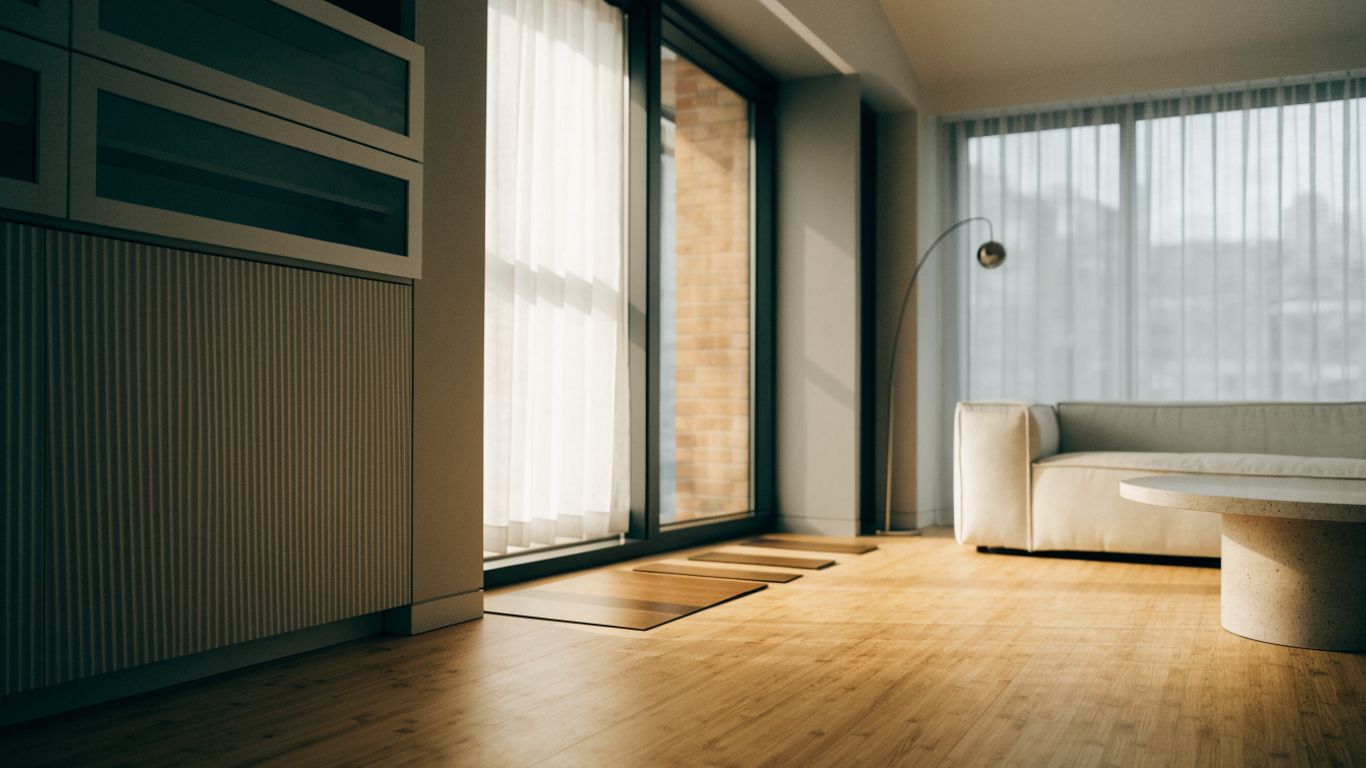
Product construction, finish and availability influence the material price, and local stock can change over time. As a rough starting point, you may see basic horizontal or vertical options around $4–$7 per square foot, strand-woven options around $5–$9, and some engineered bamboo products around $6–$12. Treat these as approximate ranges and confirm the current price, grade and included accessories with the seller.
| Product category | Approximate material cost per sq. ft. | What to check |
|---|---|---|
| Horizontal or vertical bamboo | $4–$7 | Finish, board dimensions and product grade |
| Strand-woven bamboo | $5–$9 | Construction details and wear-layer information |
| Engineered bamboo | $6–$12 | Core construction and approved installation method |
| Premium or specialty finishes | Varies | Availability, finish and matching trim |
These ranges are useful for an initial comparison, but they do not establish what a particular floor will cost. Get the product name and written price, then confirm whether underlay, transitions and matching trim are included.
Installation Labour and Extra Costs (Subfloor Prep, Old Floor Removal, GST/QST)
Installation labour is often estimated separately from materials, and the price depends on the method, room layout and amount of preparation required. A straightforward installation may add roughly $3–$6 per square foot for labour, while levelling, moisture mitigation, stairs or complicated cuts can raise the total. Ask for a written breakdown that distinguishes labour from materials and identifies any assumptions about the existing floor.
Old-floor removal, disposal, repairs to the subfloor and new transitions can also affect the total. GST (5%) and QST (9.975%) apply to taxable work and materials; ask the contractor how the taxes are shown in the estimate. A full quote is more useful than a single per-square-foot figure because it reveals which extras are included and which could arise after the floor is opened.
Want a firm number instead of a range? Call us at (438) 807-5238 and we will go through your room size, subfloor and product options. Planning the floor as part of a larger project? Ask about our financing options.
Benefits and Drawbacks of Bamboo Flooring
Bamboo offers a distinctive, often clean-lined look and a range of patterns, from prominent natural nodes to more uniform strand-woven surfaces. If you want an alternative appearance to conventional wood species, samples can help you see how the grain, colour and finish work with your walls and light. It is also made from a fast-growing plant, though the environmental impact of a particular product depends on its sourcing, manufacturing and transportation.
There are trade-offs. Bamboo is not automatically waterproof, and its resistance to dents and wear varies by construction, finish and product quality. Surface damage may be difficult to repair seamlessly, so check the care instructions and ask whether the finish can be renewed or repaired before you buy.
The floor’s performance also depends on where and how it is installed. Moisture-prone areas, uneven subfloors and large seasonal humidity swings need careful attention. Compare the written product warranty and installation requirements with your household’s needs, rather than relying on a broad claim that bamboo is durable or low-maintenance.
Bamboo vs Hardwood vs Engineered Wood vs Vinyl Flooring
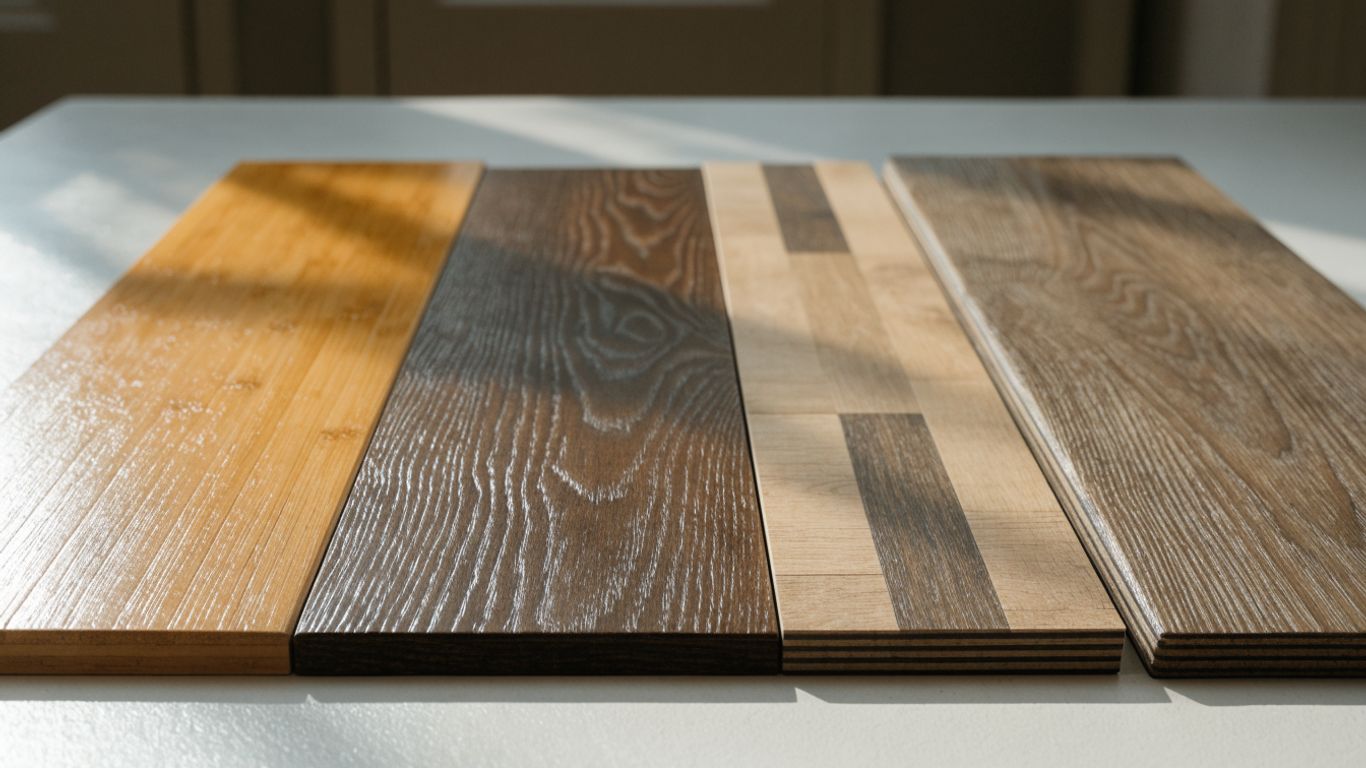
These floor types can look similar from a distance, but their construction and practical limits differ. Solid hardwood is milled from wood, while engineered wood has a wood surface layer over a constructed core; bamboo is made from processed bamboo, and vinyl is a synthetic flooring category. If you are comparing natural wood options, ask for samples of each species and finish so you can see them next to the bamboo.
| Bamboo | Solid hardwood | Engineered wood | Vinyl | |
|---|---|---|---|---|
| Made from | Processed bamboo | Solid milled wood | Wood surface layer over a layered core | Synthetic, PVC-based material |
| Moisture | Not automatically waterproof; varies by product | Sensitive to moisture and humidity swings | Often more stable than solid wood; varies by product | Often water-resistant; varies by product |
| Repair or refinish | Depends on construction and finish | Can often be sanded and refinished | Depends on the wear layer | Usually cannot be refinished |
| Look | Distinct bamboo grain or nodes | Natural wood grain | Natural wood surface | Wood, stone or tile looks |
Bamboo and hardwood both offer natural material character, but neither should be treated as impervious to water or humidity changes. Engineered wood’s layered construction may suit some installation settings, depending on the exact product and manufacturer’s directions. Vinyl is often considered where water resistance is a priority, but its feel and appearance differ from natural materials, and product specifications still matter.
The best comparison starts with your room and your priorities: appearance, comfort, moisture exposure, repairability and budget. Look at full-size samples in the actual lighting, and compare warranties and care requirements. For a whole-home project, plan the flooring alongside the rest of your residential renovation. If a bathroom is part of the plan, treat it as a separate bathroom renovation scope, since bathrooms need different moisture planning.
How Bamboo Flooring Installation Works
A good installation begins well before the first board is laid. The installer should assess the existing floor, confirm the product’s requirements and identify moisture or flatness issues that could affect the result. The product instructions should guide the preparation and fastening method, since products that look similar may have different requirements. Most single-room installations take one to three days once the materials are on site, though preparation can add time.
Subfloor Preparation and Acclimation
The subfloor needs to be clean, dry, sound and sufficiently level for the flooring system being installed. The installer should check moisture conditions and address repairs or levelling before bringing the boards into the installation sequence. Acclimation instructions vary, so follow the manufacturer’s direction rather than assuming every product needs the same number of days.
A practical preparation sequence helps you catch problems before they are covered. Ask your installer to explain how each step will be handled:
- Inspect the subfloor for damage, movement, moisture and uneven areas.
- Test moisture in the subfloor and flooring as directed by the product maker.
- Complete repairs, levelling or moisture-control work before installation.
- Acclimate and store the flooring according to its installation instructions.
These checks create a clearer basis for the installation decision and can reduce avoidable surprises. If the subfloor or indoor conditions do not meet the product requirements, resolve that first instead of pressing ahead with the boards.
Glue-Down, Nail-Down or Floating: Which Method Fits Your Home
The available method depends on the product’s design, the subfloor and the room. Glue-down installation bonds the boards to the approved substrate; nail-down installation fastens compatible flooring to a suitable wood subfloor; floating installation joins boards without fastening them directly to the subfloor. Not every bamboo product supports every method, so the manufacturer’s instructions should settle the question.
Ask the contractor to state the proposed method in the estimate and explain why it fits your floor assembly. This is particularly useful when you have an older home, an existing floor layer or a concrete subfloor, since those conditions can limit the choices. The method also affects preparation needs and any approved underlay or adhesive.
If you live in a condo or apartment, check your building’s rules on flooring and sound before you order. Our condo renovation guide and apartment renovation tips cover what to confirm with your building first.
Bamboo in Basements and Over Radiant Heating
Basements deserve extra scrutiny because below-grade rooms can have moisture conditions that are different from upper floors. Do not assume bamboo is suitable simply because the space looks dry; check the product’s below-grade approval and have the installer assess the slab and moisture conditions. If the product is not explicitly approved for the space, choose another flooring solution. If you see signs of water, fix that first. Our basement waterproofing guide explains the warning signs and how the process works.
Radiant heating is another product-specific question. Confirm that the bamboo flooring is approved for the system and that its temperature limits, installation method and operating guidance can be followed. A contractor should be able to point to the relevant instructions rather than relying on a general assurance that bamboo works over every heated floor. Planning heat under a bathroom floor instead? See our guide to heated bathroom floors.
Hiring a Bamboo Flooring Contractor in Montreal
A qualified general contractor should be ready to discuss the product, the site conditions and the work included in the estimate. Compare written proposals rather than choosing solely on a low per-square-foot price; one bid may include removal and levelling while another leaves them out. Clear communication before installation makes it easier to understand decisions if unexpected conditions appear.
What to Ask Before You Hire (RBQ Licence, Insurance, Warranty)
Ask who will perform the work, what preparation is included and how the contractor will handle moisture testing, old-floor removal and disposal. For regulated work, confirm the appropriate RBQ licence for the scope; you can check a contractor’s licence on the Régie du bâtiment du Québec website. Also request proof of liability insurance and details of the workmanship warranty. Ask how the product manufacturer’s warranty interacts with the proposed installation method and what documentation you will receive.
Before signing, make sure the estimate identifies the flooring, installation method, preparation, trim, cleanup, schedule and taxes. If anything depends on uncovering the subfloor, ask how additional work will be priced and approved. A contractor who explains those terms plainly gives you a more reliable basis for comparing bids.
Ready to price your bamboo floor? Get a bamboo flooring quote from SKLZ Construction. We are RBQ-licensed and insured, and we serve Montreal, Laval and the surrounding areas we serve.
Bamboo Flooring Montreal FAQs
How much does bamboo flooring cost in Montreal?
Total cost depends on the bamboo type, the subfloor condition and the installation method. Material often runs roughly $4–$12 per square foot depending on construction, and labour may add roughly $3–$6 per square foot. Old-floor removal, levelling and trim are extra, and GST (5%) and QST (9.975%) apply on top. For an exact figure, we measure the space and give you an itemized quote.
Is bamboo flooring a good choice for Quebec’s climate?
It can be, if you choose and install it correctly. Quebec swings from humid summers to very dry heated winters, and bamboo responds to those changes. Strand-woven bamboo is generally denser, while horizontal and vertical styles may move more. Keeping indoor humidity within the manufacturer’s recommended range is the best way to limit gaps in winter and cupping in summer.
Does bamboo flooring scratch easily?
Scratch and dent resistance varies by product, finish and daily use. Strand-woven bamboo is usually harder than horizontal or vertical styles, but no bamboo floor is scratch-proof. Furniture pads, entry mats and suitable cleaning tools help reduce surface wear. Check the product’s hardness rating and wear-layer warranty before you buy.
Can bamboo flooring be installed in a kitchen?
It may be appropriate in some kitchens, but bamboo is not automatically waterproof. Check the product’s moisture guidance, clean spills promptly and follow its care instructions. If you are remodelling the room too, we can coordinate the floor with your kitchen renovation.
Is bamboo flooring suitable for a basement?
Only consider it if the specific product is approved for below-grade installation and the basement’s moisture conditions meet its requirements. Concrete slabs can release moisture, so the slab should be tested first, and a floating installation over a suitable moisture barrier is often the safer route. Ask for an assessment before installation. If you are finishing the whole lower level, see our basement renovation service.
Can bamboo flooring go over radiant heat?
Some products are approved for radiant heating, but temperature limits and installation directions vary. The system should be brought up to temperature gradually, and floating or glue-down methods are generally more suitable than nail-down over in-floor heat. Confirm approval in the product documentation before choosing a floor.
How long does bamboo flooring installation take, and does it need to acclimate?
Most single rooms take one to three days once materials are on site, with extra time if the subfloor needs levelling or old flooring must come out. Acclimation requirements differ by product, so follow the manufacturer’s instructions and confirm that the home’s humidity and temperature meet its requirements before the boards go down.