
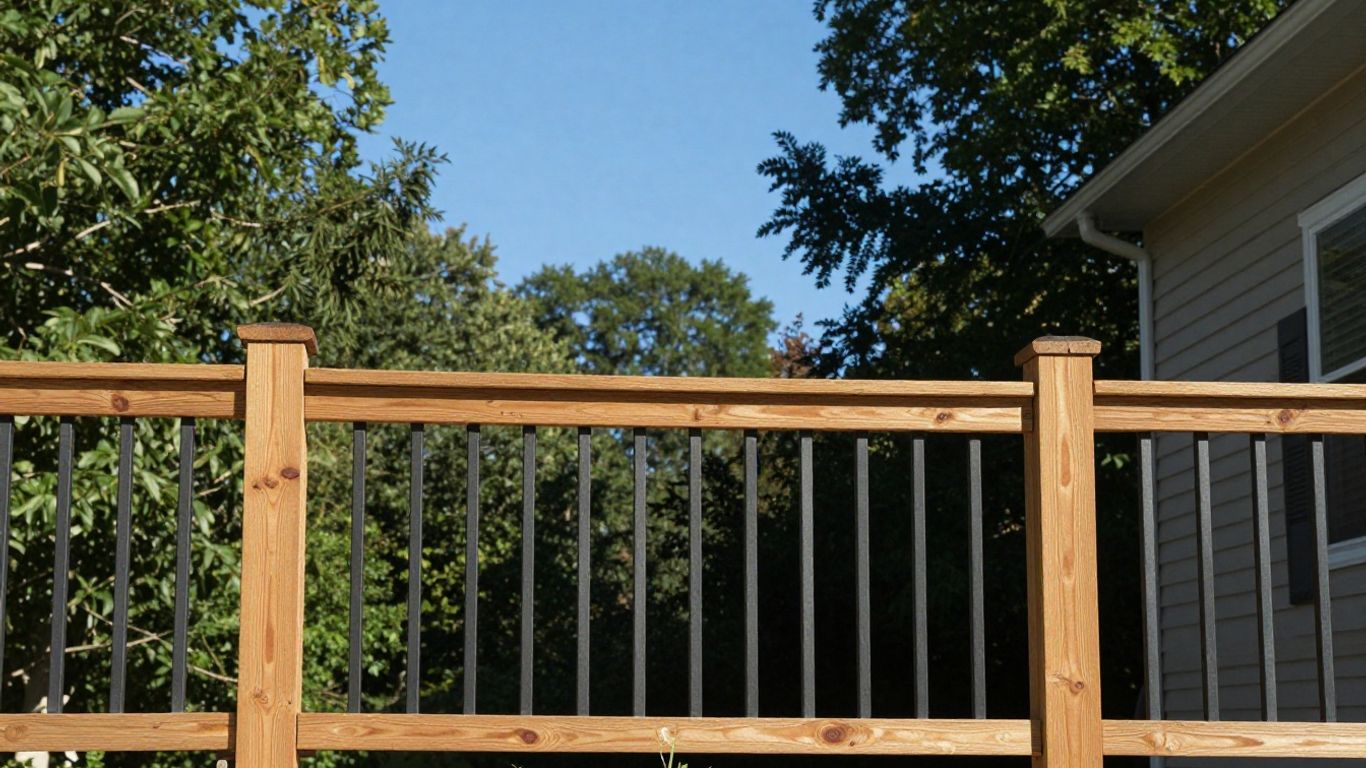
A deck railing does more work than most homeowners give it credit for. It’s the one piece of your deck that’s purely there for safety, and it’s also usually the first thing people notice when they walk out the door. I’ve handled deck railing installation across Laval and Montreal since 2022, and the projects that go smoothly all share the same starting point: picking the right material for our climate and getting the code requirements right before a single post goes in. Railings are just one part of a larger project. If you’re planning a full build, our deck contractors montreal team handles everything from framing to finishing.
What Deck Railing Installation in Montreal & Laval Actually Involves
Deck railing installation in Montreal & Laval isn’t just attaching a fence to the edge of your deck — it’s a safety system that has to hold up against real winters, and it has to meet Quebec’s building code from the first post. On every project, we work through the same sequence:
Site assessment — evaluating the existing deck structure and figuring out the best railing design and post placement for it
Material selection — wood, aluminum, composite, or glass, weighed against durability, maintenance, and how it fits the rest of the house
Code compliance — confirming height, baluster spacing, and structural attachment meet Quebec’s building regulations
Installation — securely fastening posts, rails, and balusters into a structure that isn’t going anywhere
Finishing — caps, coatings, or decorative elements to complete the look
Done properly, a railing does two jobs at once: it prevents falls from an elevated deck or stairway, and it becomes part of what makes the deck feel finished rather than like a construction site with a fence around it.
Choosing the Right Railing Material for Quebec Weather
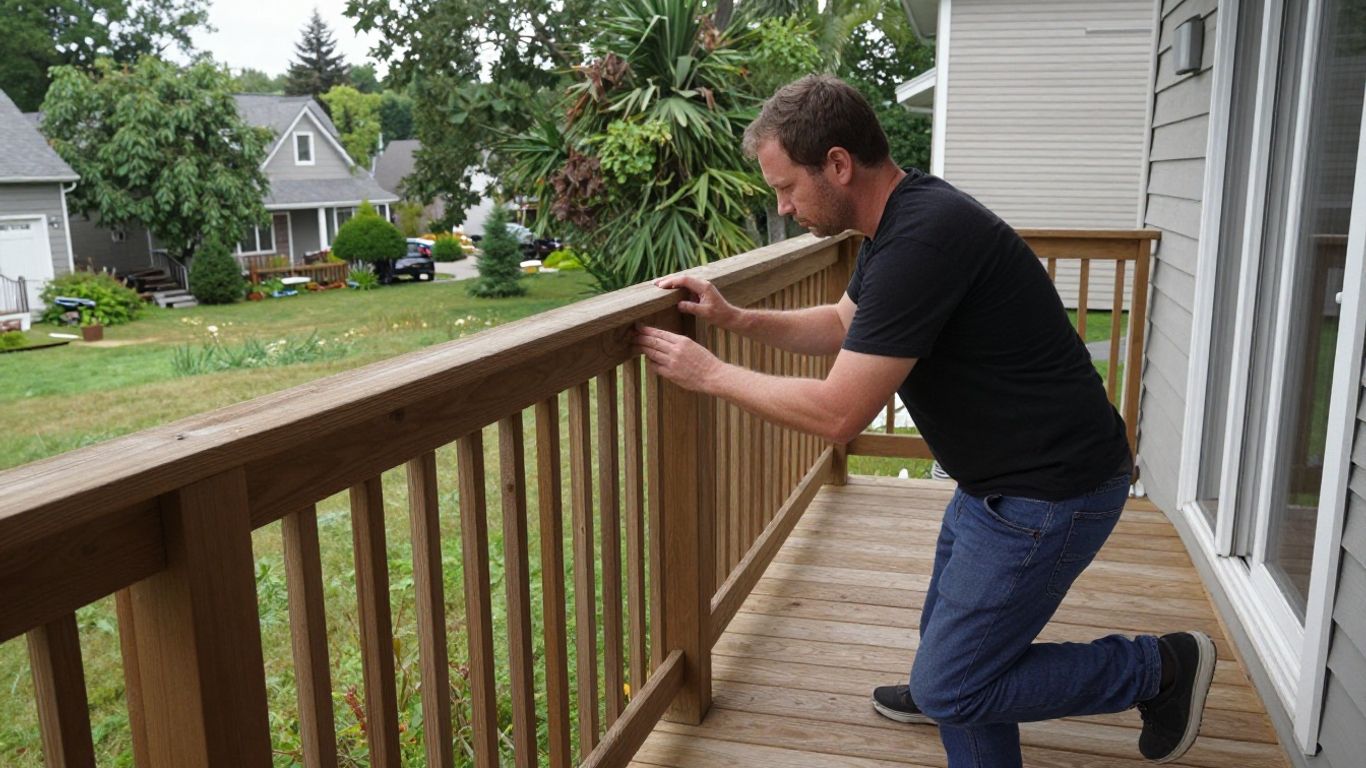
Material choice matters more here than in a lot of climates, because whatever you install has to handle real snow load and freeze-thaw cycles every year.
Wood
Classic and can be stained or painted to match anything, but it needs regular sealing, and Quebec winters are hard on it if that maintenance slips.
Composite
Our most-recommended option for clients who want low maintenance. It resists rot, insects, and fading, holds up well against snow and sun, and comes in enough colours to match most home styles.
Aluminum
Lightweight, strong, and rust-resistant — a good fit for a sleek, modern railing that needs almost no upkeep.
Vinyl (PVC)
Similar maintenance profile to composite, fully plastic, and won’t rot or splinter.
For most Montreal and Laval homeowners weighing durability against upkeep, we steer people toward composite or aluminum. If you want something more custom — mixed materials like wood posts with metal balusters, or integrated lighting — that’s very doable, but it’s worth confirming local code requirements for height and spacing early in the design process rather than after materials are ordered.
How Deck Railing Installation Actually Works
If you’re considering doing this yourself, it’s a manageable project with the right tools and patience — but the layout and measurements are where precision matters most.
Check for a permit first. Some municipalities in the region require one for railing work, and it’s a lot cheaper to confirm this up front than to redo work after the fact.
Here’s the general sequence:
Plan the layout. Measure the deck perimeter and mark post locations — typically at corners, then spaced every 4 to 6 feet depending on material and local code.
Install the posts. These carry the structural load, so they get bolted directly to the deck’s joists or ledger board, plumb and secure. A post that’s only screwed to the decking boards isn’t attached to anything structural.
Attach top and bottom rails. These connect the posts and provide the structure the balusters or infill will sit in.
Install balusters or infill. Spacing needs to meet code — generally no more than 4 inches apart, so a small child can’t slip through.
Add a top cap if the system uses one, for a finished look and a comfortable surface to lean on.
Precision matters here the same way it does in any structural finish work — get the layout and post placement right, and everything downstream goes smoothly.
Building Code and Safety Requirements
Montreal and Laval both follow Quebec’s building code requirements for deck railings, and these aren’t optional details — they’re what keeps people safe on an elevated structure:
Height — typically around 36 inches for residential decks, though this can shift depending on how high the deck sits off the ground
Baluster spacing — generally capped at 4 inches to prevent young children from slipping through
Post strength and attachment — posts need to be anchored into the deck’s structural framing, not just the surface boards
Handrails on stairs — required wherever a deck has stairs, sized to be easy to grip
Load capacity — railings need to withstand a specified force per linear foot, since people lean on them constantly
Codes get updated, so we always confirm current requirements with the local building department before finalizing a design — what was compliant a few years ago isn’t always compliant today.
Repair or Replace?
This comes down to how widespread the damage actually is. A loose post, one cracked baluster, or light surface wear is usually a straightforward repair — quick, budget-friendly, and doesn’t require touching the rest of the system.
Replacement makes more sense when you’re seeing multiple rotted posts, real structural instability, or a railing that no longer meets current code. Patching a structure that’s fundamentally compromised tends to cost more over time than just doing the replacement once. A partial replacement — swapping just a damaged top rail while keeping sound posts and balusters — is sometimes the right middle ground, and a proper assessment will tell you which category you’re in.
Keeping a New Railing in Good Shape
Maintenance depends on what you installed. Wood needs a gentle soap-and-water scrub and periodic resealing. Composite and aluminum can generally just be hosed down. A few things worth checking a couple of times a year regardless of material:
Fasteners — screws and bolts can loosen with temperature swings; a quick check and tighten prevents bigger issues
Cracks, splinters, or rust — catching these early is a lot cheaper than a full section replacement later
Post stability — a wobbly post is a genuine safety issue, especially with kids or pets around
Debris at the base — leaves and snow trap moisture against posts and accelerate rot
Even low-maintenance materials benefit from this kind of periodic check — it’s a small habit that protects the investment.
Mistakes We See Most Often
After a lot of these projects, the same issues come up repeatedly:
Skipping the local code check before starting, which usually means redoing work later
Under-fastening posts — screwing into deck boards instead of bolting into structural framing
Baluster spacing that’s too wide, missing the 4-inch safety threshold
Mixing incompatible metals between fasteners and railing components, which can lead to corrosion over time
Blocking drainage off the deck surface with railing placement, which leads to rot down the line
Why New Railings Are Worth the Investment
Beyond the safety case, a new railing changes how a deck actually gets used. Old, wobbly railings quietly discourage people from spending time outside; secure, well-built ones do the opposite. They also genuinely affect resale — buyers notice a deck that looks solid and well-maintained, and low-maintenance materials like composite or aluminum mean less upkeep for whoever owns the house next.
Frequently Asked Questions
What does deck railing installation in Montreal & Laval typically involve?
Site assessment, material selection, confirming code compliance for height and spacing, securely installing posts, rails and balusters, and finishing touches like caps or coatings.
What’s the most popular railing material in this area?
Composite and aluminum are the most common choices among our clients, largely because they hold up well against Quebec winters with minimal maintenance.
Do I need a permit for deck railing work?
It depends on the municipality — some require one even for railing-only projects. Worth confirming with the local building department before starting.
When should I replace rather than repair my railing?
When damage is widespread — multiple rotted posts, real structural instability, or a system that no longer meets current code — replacement is usually more cost-effective than repeated repairs.
How much maintenance do new railings need?
Composite and aluminum need little more than occasional washing. Wood needs periodic sealing and more regular attention to stay ahead of Quebec’s weather.
Get a Quote
If you’re planning deck railing installation in Montreal, Laval, or the surrounding area, our team at SKLZ Construction can assess your existing deck, walk you through material options, and make sure everything meets current code. Reach us at (438) 826-7584 or info@sklzconstruction.com for a free quote.
Sebastien Lalonde is the founder of SKLZ Construction, a residential renovation company based in Laval, Quebec, serving the greater Montreal area since 2013.